
 Well, the ‘Con has left the building. But yesterday was still a whole lot of fun, and had a surprisingly great slate of panels to choose from. I say surprisingly because typically Sundays are “wind down” days, with a bunch of so-so panels that are really round-robins of folks chatting about whateverall (though sometimes that can be pretty awesome, it’s usually just for the niche fan). I skipped the costume contest in order to hit a few of these panels, and protip? If you’re sick to death of crowds, that’s the thing for you to do next year. You’ll even have plenty of time to make your way to the costume contest finals, should you wish to freak out over the amazingness that can be found there.
The coolest part of hitting BCC this year? Running into folks I know, folks whose work I’ve reviewed, and people who were in panels I enjoyed. The Fifth Beatle’s Vivek Tiwary was especially gracious when I congratulated him on his Harvey wins and told him I enjoyed his panel. His enthusiasm for the work he creates is definitely infectious, and I look forward to more of his stuff. Ditto for The Horror Show’s James Maddox; I’ll be reviewing new stuff from both of these creators later this week….
Onward, to the panels!
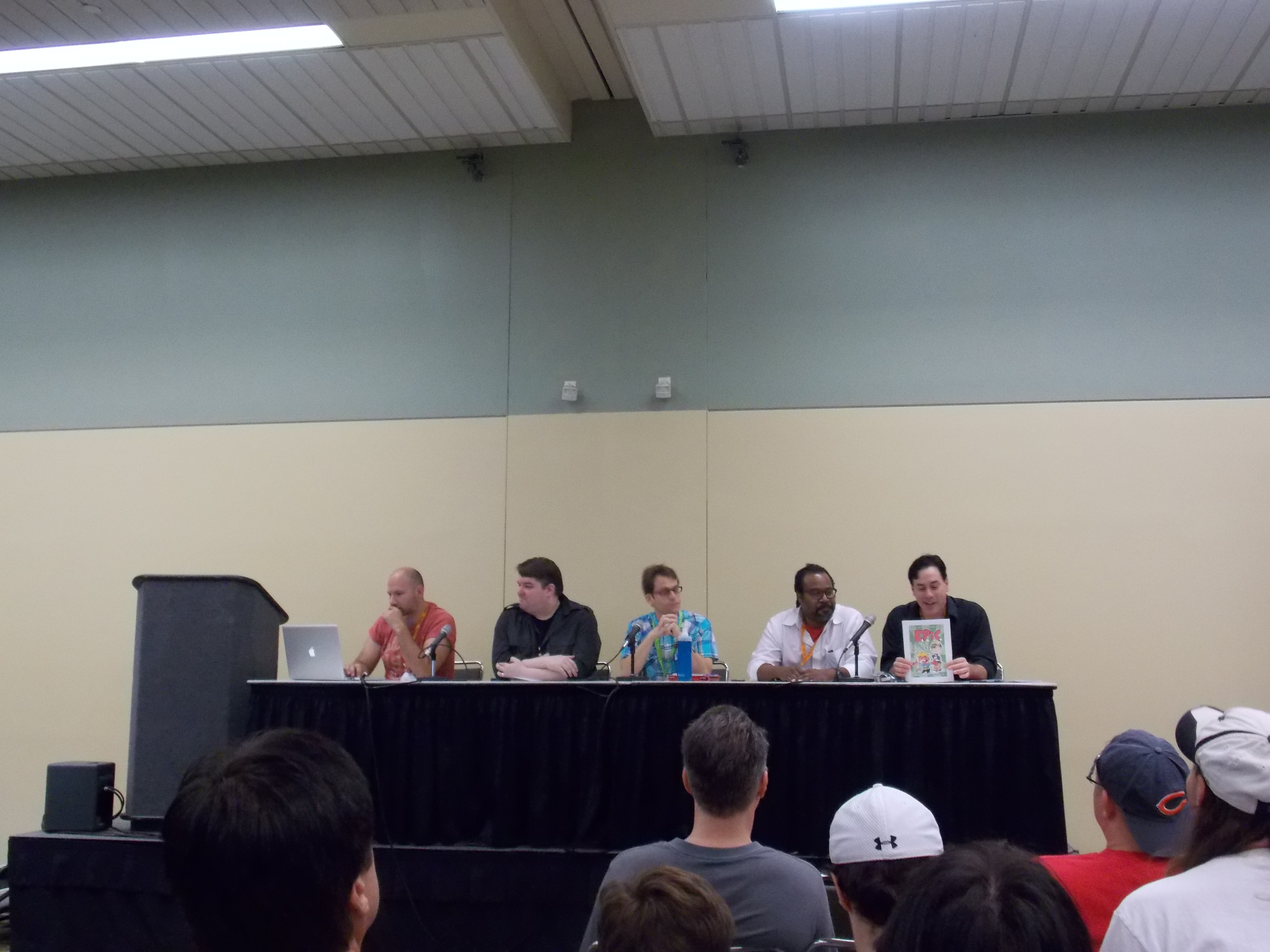
Comic Book Diner – Building Worlds in Comic Storytelling: a panel for would-be comic book creators interested in how to build a world, rather than trying to plop their characters into the void. Or worse, into Boringland. John Gallagher, Jamar Nicholas, Mark Mariano and David Petersen had TONS of ideas, and linked ’em to stuff they’ve created. Because you can give all the tips you like, but unless those tips have been successful? Sad trombone. From the furiously scribbling attendees, these were lessons taken to heart.
- World building is more than just the mythology that surrounds your world. It’s the city/village/town your characters live in, it’s where they grew up (if that’s different), it’s the cities/towns/places that are near where they are. What kinds of characters live there with your character? How do all of those things influence your character? A city gal will react differently to something than would a country guy. Or would they? It all depends on what they’ve experienced.
- Once the world was fleshed out, a panelist “figured out more about these characters than I ever knew.”
- #protip – keep a few things secret, that only you know. Think Meryl Streep: having something that only you know about a character helps deepen your understanding of that “person”, and you’ll have a more well-rounded, more relatable character. Plus, anything to keep yourself invested in what you’re doing is a huge plus. Because it’s you that’s working on this. Make sure you enjoy your own ride.
- You don’t want to waste your time and your audience’s time dumping a ton of information onto them. It’ll take away from the story, and could overwhelm the character itself. Give ’em visual clues instead. (Easter eggs, inside jokes, running gags, historical tidbits….) A sense of familiarity helps readers feel comfy with The New.
- Make sure your background characters have stories too. If Bruce Wayne is buying something at the store and will ultimately save a little old lady further in your story, why not have her in the store too? Perhaps trying to reach a loaf of bread and failing, only to have everything topple? So when he saves her and she says “thank you, you really made my day!” it’s deeper.
- Over-arching ideas are good too; Tolkien’s Elvish language informed the entire LOTR series. But remember: don’t dump it all out. Tolkien had volumes of unpublished notes that nobody ever read about in his novels. That said, something immediate to hook readers definitely helps when you’re trotting out a brand-new product. Don’t be the “well, in issue 33 it really gets interesting” creator. Because who’s gonna read a bunch of boring stuff ’til then?
- A test to see if your character is ready for it’s close-up: can you do an 8-page story? Start there and see what happens. You may find that you’ll need to flesh him/her/it out more, or you could find that you have a ton of stuff that can be told. Either way, you win.
- It’s great to develop a massive, immersive world. But there comes a point where the ideas swamp the story. So? Create the world…and then WRITE THE STORY. Fear failure? It’s better to do it wrong and start over than simply sitting on your ideas. If it all feels too overwhelming, jot down notes, doodle, record your ideas. But get them down. Otherwise your massive, incredible story will never be told. And that’d suck.
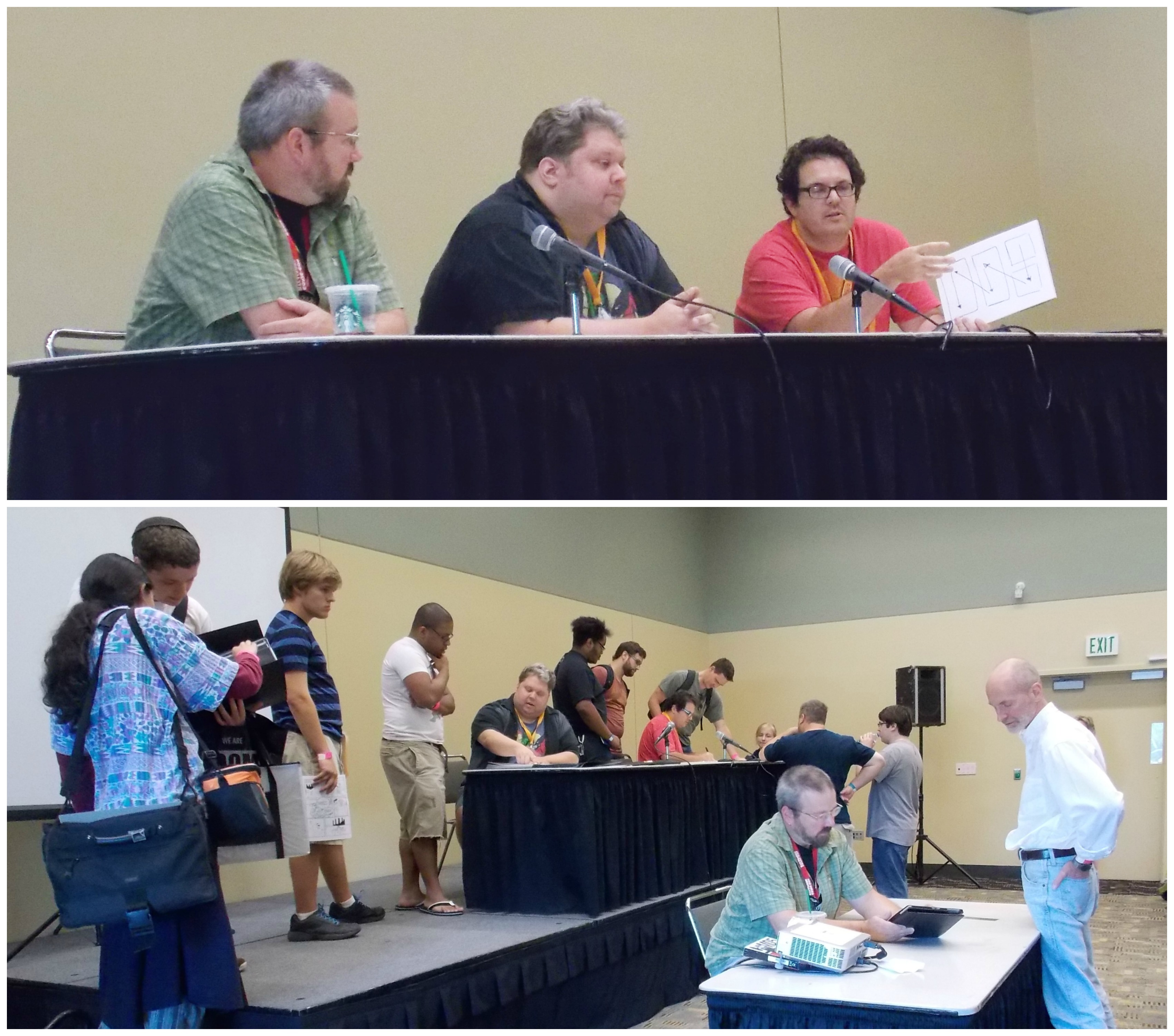
Portfolio Review: where my artists at? There were a lot of ’em at the panel that promised a look at what they’d created. And tips. Plenty of tips from Dave Bullock, Craig Rousseau, and Chris Kemple. Though I couldn’t draw a stick figure to save my life (and my hearts look like mutant commas), I found the insider know-how fascinating. Nutshell: for me, this panel really helped me develop an appreciation of the work involved, much beyond my usual “jeepers y’all are talented!”
- Play to your strengths to break in. If pencils are your thing, get someone else to help with colors/inking/etc, and vice-versa. Throw ’em your best stuff to show the powers-that-be what you’re really made of. DO NOT bring them stuff that even you know is sub-par. You’re wasting their time, and your (possible) big break.
- Technical expertise is important, but storytelling — and the ability to follow a script — is vital. The latter two will trump the former when the chips are down. Can you leave room in your art for dialogue? Can you follow the editorial style? BTW….
- Editors want to see what they’re working on, to see if you’ll fit in. So don’t trot out Archie to an Image editor. Do your research; who’s editing what book, and what’s their style? Be aware of their style. Is it gritty? Clean? Minimalist? Detailed? Get your art in front of editors that look like your art would be a good fit.
- Don’t swamp ’em. 4 pages or so should do it. More and they may skim; remember you’re not the only one whose art they’re checking out, and probably not the only one that particular day. Start with pencils and storytelling, even though you really wanna do covers. Because who doesn’t want to do cover art? Cover art is very competitive, and you’ll have to work your way up.
- BE ABLE TO TAKE CRITICISM. That was the #1 point these panelists tried to get into the brainpans of the attendees. You could ask 40 different people for a critique, and receive 40 different opinions. Do not get belligerent. Editors are looking to see if you’re listening to what they have to say, and if you’d be open to honest discussion about your work. Artists in comics do not work in a vacuum, it’s a group effort. If you get testy or won’t budge? That speaks to how well you’ll be able to collaborate. Or not. Listen, discuss…and they’ll see you as someone they can work with.
- Practice what inspires you. Yes, superheroes are the thing in comics. But if they don’t speak to you, it’ll show in your work, and it won’t be any fun for you. Enjoy what you do. Don’t try to force yourself into a particular genre. Do you.
- When you’re thinking about your style, think about timeframes, and what you’re capable of within those restrictions. Sometimes it’s tougher to get that second job than it is that first one, if you overpromise what you can deliver. Showing off something that took you three weeks to draw? Gorgeous, but if you present it as something that can be done on a deadline and there’s no way you could duplicate it within those parameters? Fail. (That said, everyone in comics knows there’s a slight exaggeration when you show your work vs. when you’re on deadline. Emphasis on slight.)
- You don’t need to outfit yourself with a full-on digital studio. Don’t lay out that kind of cash when you’re starting out. Learn the basics of Photoshop, but scan, scan, scan. Plus, you want to keep what you’ve drawn with you; artists fought long and hard to keep control of their art. Honor their fight by keeping yours. Y’know, until you sell that original at a Con to pay the rent. Because that works too.
- Once you’re in the game, you’ll develop a “visual vocabulary” to help you get through your deadlines. Research will be not as necessary, but til then? Save files on your desktop to reference as you draw. Outline the basics, and refine with research later. Ex: if you’re drawing a street filled with parked cars, sketch out the basic car, and then go back and fill in the details. Period piece with old gas-guzzlers? Europe with tiny gas-savers? Futuristic with George Jetson-mobiles? Hello Google!
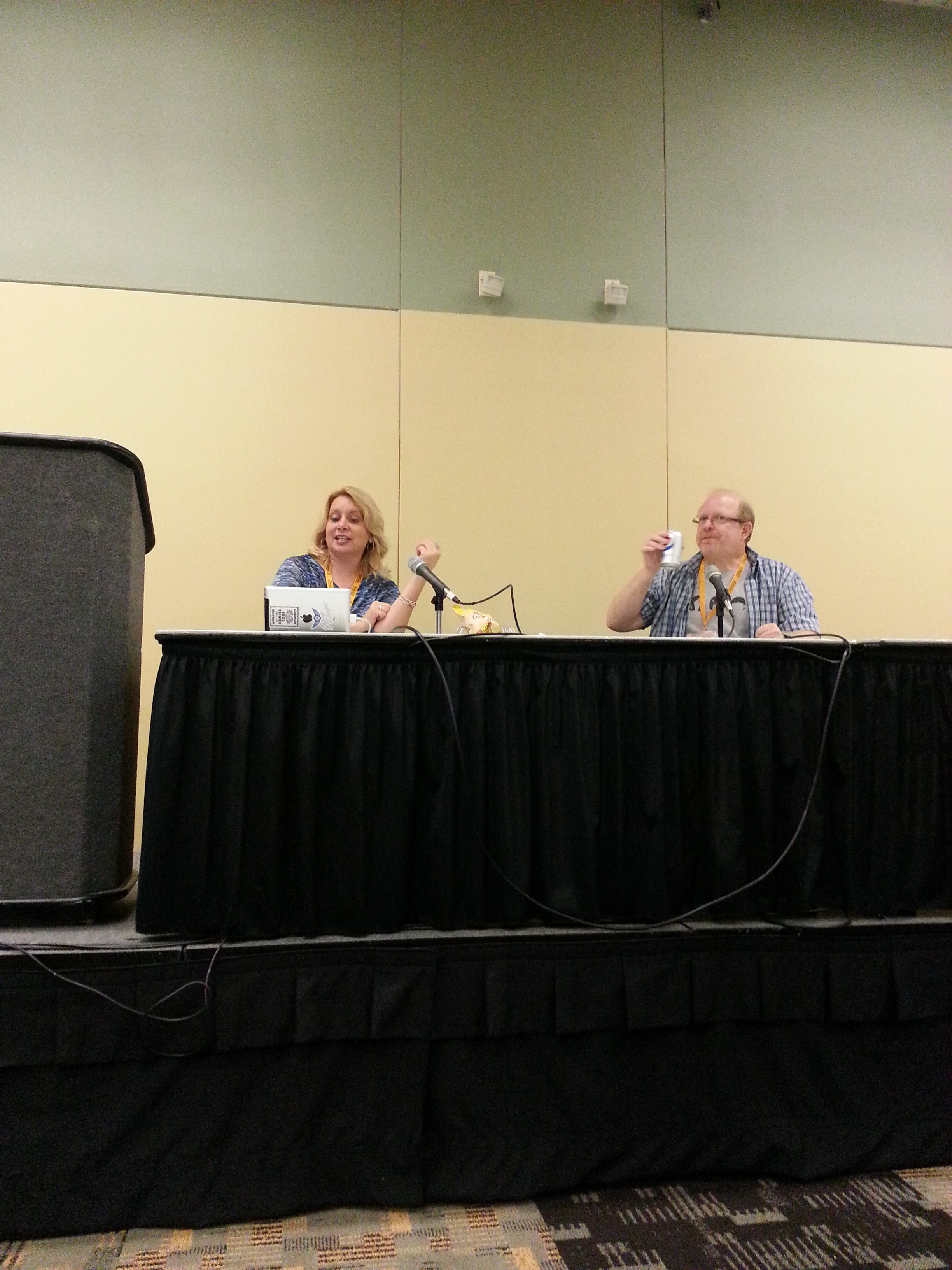
Mort Weisinger and the Witch of Metropolis: A little history, a little genre studies. A perfect way to end my time at this year’s ‘Con. I now know that I’d go to a panel where Christy Blanch reads her junk mail. She’s that entertaining and informative. Discussing a topic I’d never heard of, but found interesting when the description said “Weisinger, known to dictate most of the stories and all of the themes to his writers for nearly twenty years, used Lois Lane as a vehicle to express his own often-disturbing personal anxieties and fears about women, love, and the budding feminist movement.” Mark Waid even joined in the discussion! I’m glad I went.
- In the Silver Age of comics, there were plenty of strong women; Rita Farr (Elasti-girl), Jean Loring (attorney/Atom’s gf, now Eclipso), Iris West (reporter/The Flash’s gf). And then there’s Lois Lane, the weepy when-will-Superman-propose gal. “One of these things is not like the other….” Lois cries, blames herself when Superman won’t marry her. Why?
- Because Mort Weisinger took the reins of DC in the 50s, so Lois — a strong character that came on the scene in ’38 just like Superman — was “put in her place” after being “uppity”. Weisinger, who worked at DC for 30 years and oversaw all of the Superman titles, had plenty of time to change Lois from strong to simpy. He was very involved in story development, and until 1970 took his insecurities out on Lois, and by extension the entire Superman universe. He would re-write stories to fit his beliefs (his “mold”), and would tell creators what they were going to do, rather than taking note of their ideas and choosing from there. So, Lois endured being the laughing stock, getting yelled at by Superman, and was generally treated like the village idiot. Don’t worry though, all women characters dealt with that under Weisinger. (See: Lana Lane.)
- There’s some good amid all this misogyny; much of what is considered Superman canon is thanks to Weisinger. The Fortress of Solitude, the different colors of kryptonite, the Phantom Zone and the Legion of Superheroes? All Mort. But he was also more interested in the “gimmick” than the characters (where at Marvel it was the opposite. )
- Mort brought personality to the table, but unfortunately that personality had a dark side. “Fat and bald” were the two taboos; either spelled evil or stupidity. Why? Because Weisinger was overweight and bald, and he hated himself for it. He was also jealous of Superman, and was overall a very unhappy man.
- In the shift from the 50s to the 60s, with the second wave of feminism, artists tried to bring Lois into the now. Meanwhile, Mort was “reflecting (his) anxiety about women”. Superman would yell at Lois “for her own good”, even though he’s supposed to be “the perfect man”. Kids reading these comics came away with quite a toxic education, one that would linger long after Mort’s retirement.
- While Mort Weisinger did do horrible things to Lois’ character, when he stepped down she became highly sexualized. Chalk it up to half a win?





 Atomic Fangirl